East Meets West: The Design Intelligence Your Home Needs
By Kenneth Bordewick | Beverly Hills Luxury Interiors | ÖND | Life's Breath™ · In clinical collaboration with Dr. Thom Lobe MD and Dr. Fouad I. Ghaly MD
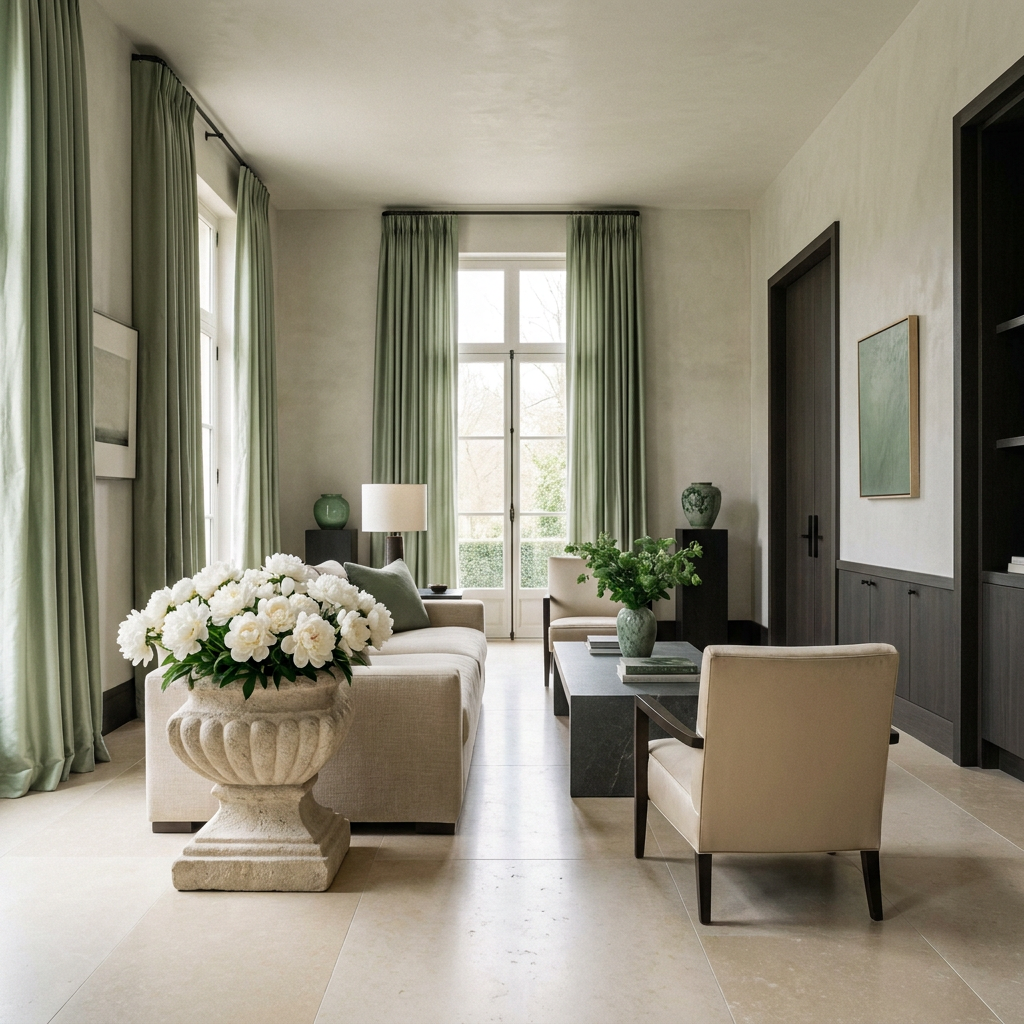
There is a statistic that ought to trouble every person who considers themselves a steward of their own health: the environments of the world's most expensive homes are, in the majority of cases, designed entirely without reference to the ancient wisdom that built civilisations of extraordinary longevity.
Consider what Eastern philosophy understood millennia before Western science gave it language. Feng shui is, at its foundation, a system of environmental intelligence — the arrangement of space in alignment with natural energy flow, the calibration of rooms to human biological rhythms, the deliberate use of natural materials and elemental balance to support the body's deepest functions. Ayurveda identified the relationship between environment and constitution — between the qualities of a space and the physical and psychological flourishing of those who inhabit it. Traditional Chinese Medicine mapped the circadian organ clock seventeen hundred years before chronobiology confirmed its existence.
At Beverly Hills Luxury Interiors, Kenneth Bordewick and the team at ÖND | Life's Breath™ do not treat these traditions as decorative mythology. They treat them as data — ancient, accumulated, clinically resonant data that physician partners Dr. Thom Lobe MD and Dr. Fouad I. Ghaly MD help translate into the language of modern longevity science. This is the East-meets-West design philosophy. Explore its foundations at our Quiet Luxury Wellness Design overview and at Wellness Design Principles.
I. The Eastern Principles That Western Design Has Neglected
Feng shui's concept of qi — the vital force that moves through and sustains all living systems — is not a mystical abstraction. It maps closely onto what environmental scientists understand as air circulation, natural light penetration, and spatial arrangement for human psychological ease. A room where qi flows freely is, in empirical terms, a room with excellent ventilation, natural daylighting, and an absence of spatial congestion. The ancient principle and the modern measurement arrive at precisely the same prescription.
Ayurvedic practice prescribed different activities for different times of day, aligning human behaviour with the sun's arc. The Charaka Samhita, among the oldest medical texts in existence, recommended specific sleeping orientations, morning light exposure, and ambient conditions that we now recognise as circadian hygiene. Western chronobiology — the science of biological time — arrived at precisely the same conclusions through entirely different methods. The Nobel Prize in Physiology or Medicine 2017 was awarded for discoveries of the molecular mechanisms controlling circadian rhythms. Eastern medicine had described these mechanisms, in experiential rather than molecular terms, for thousands of years.
“The ancient East did not design spaces for beauty. It designed them for biology — and called that beauty.”
— Kenneth Bordewick
II. Eastern Material Philosophy in the Luxury Interior
The Eastern relationship with natural materials carries a rigour that Western decorative traditions rarely match. In Japanese design, wabi-sabi — the beauty of impermanence and natural imperfection — dictates that materials be authentic, unmasked, and biologically honest. No veneers. No synthetic approximations. Stone that feels like stone. Wood that breathes.
Ayurvedic material science has long recognised that the substances brought into our living environments interact with the body through multiple pathways — touch, inhalation, and subtle energetic resonance. Materials of natural origin, aged and seasoned, carry a biological compatibility that synthetic materials cannot replicate. This is not sentiment. Our material purity protocols — developed in collaboration with Dr. Fouad I. Ghaly MD and informed by indoor air quality science — eliminate all petrochemical finishes, synthetic adhesives, and off-gassing materials from our commissions. Natural plasters, mineral paints, raw stone, and certified natural-fibre textiles are not aesthetic choices alone. They are health infrastructure.
III. Water, Sound, and the Architecture of Stillness
Water holds particular significance across Eastern traditions. In feng shui, water features placed with precision activate beneficial energy flow and enhance the quality of air through ionisation and humidity regulation. In vastu shastra — the ancient Indian science of spatial design — water is assigned specific positional significance relative to the cardinal directions and the sun's path, always in service of the inhabitants' biological and psychological wellbeing.
Translated into the contemporary biohacking home, this becomes hydrology architecture: water features calibrated for their acoustic contribution, whole-home water purification and remineralisation, and the integration of water as both sensory and functional element. Research in Environmental Health and Preventive Medicine demonstrates that natural water sounds consistently activate the parasympathetic nervous system, reducing cortisol and supporting the rest-and-digest state essential for cellular repair. The ancient insight and the clinical finding are one.
Acoustic design in the East-meets-West home is inseparable from wellbeing. Nada Brahma — the Sanskrit recognition that “the world is sound” — is an ancient acknowledgement that acoustic environments act upon the nervous system continuously, without permission. The biohacking home engineers this action deliberately, transforming the acoustic landscape from background condition to active biological support.
IV. Circadian Wisdom: Ancient and Modern in Full Alignment
The circadian organ clock of Traditional Chinese Medicine — which maps specific organ systems to two-hour windows throughout the twenty-four-hour cycle — is among the most precise empirical observations ever made about human biology. The liver regenerates between 1 and 3 AM. The lungs are most active between 3 and 5 AM. The heart governs the midday hours. These observations, recorded in the Huangdi Neijing nearly two millennia ago, align with extraordinary fidelity to contemporary chronobiology's understanding of organ circadian rhythms.
A Beverly Hills Luxury Interiors commission designed through the East-meets-West lens incorporates this understanding at every level: lighting systems that honour the circadian arc, sleeping environments oriented to support the organ clock's nocturnal work, and spatial sequences that guide inhabitants through a day in alignment with their biological rhythms. Dr. Thom Lobe MD, regenerative medicine specialist and BHLI clinical partner, identifies circadian alignment as among the highest-leverage longevity interventions available — one that the designed environment can deliver continuously, without effort or compliance.
“East and West arrived at the same truth by different roads. Our task is to build that truth into the home — so that every hour within it works in service of the life you are building.”
— Kenneth Bordewick
V. The Integration: Beauty and Biology, Tradition and Innovation
The most profound insight that emerges from the convergence of Eastern tradition and Western science is this: beauty, rightly conceived, has always been a form of biological intelligence. The environments that Eastern civilisations designed for their most elevated purposes — temples, imperial courts, scholars' retreats — were, without exception, calibrated to support human flourishing at every level. The aesthetic and the biological were never in competition. They were the same aspiration.
Beverly Hills Luxury Interiors does not design spaces that are merely beautiful in the conventional sense. Every commission expresses the full integration of Eastern elemental wisdom, circadian intelligence, acoustic serenity, material purity, and the clinical precision of physician-partnered longevity design. This is the convergence of East and West, ancient and modern, intuition and evidence — expressed through every surface, every proportion, every quality of light and air and water that constitutes the home. Explore the full philosophy through our Quiet Luxury Wellness Design and Wellness Design Principles pages.
Discover the East-meets-West Design Intelligence in Your Home
The Longevity Home Wellness Design Audit, offered by Beverly Hills Luxury Interiors and ÖND | Life's Breath™ in partnership with Dr. Thom Lobe MD and Dr. Fouad I. Ghaly MD, assesses your home across every dimension of the East-meets-West framework — elemental balance, circadian alignment, material purity, acoustic serenity, water integrity, and atmospheric health. The result is a prioritised, physician-informed roadmap for a home that works at the biological level — in the service of your longevity.
Enquire About Your AuditSources: Charaka Samhita (Ayurvedic environmental and circadian principles); Huangdi Neijing (Traditional Chinese Medicine circadian organ clock); Hall J.E. et al., Nobel Prize in Physiology or Medicine 2017 (molecular mechanisms of circadian rhythms); Brownell M. et al. “The effects of blue space and soundscapes on the autonomic nervous system.” International Journal of Environmental Research and Public Health, 2019; Evandro F. et al. “Indoor VOC emissions and health effects in residential environments.” Building and Environment, 2022. | Reference: Dr. Thom Lobe MD, Beneveda Medical Group, Beverly Hills. | Reference: Dr. Fouad I. Ghaly MD, Integrative Longevity Medicine.