Your Five Senses Hold the Keys to Health
By Kenneth Bordewick | Beverly Hills Luxury Interiors | ÖND | Life's Breath™ · In clinical collaboration with Dr. Thom Lobe MD and Dr. Fouad I. Ghaly MD
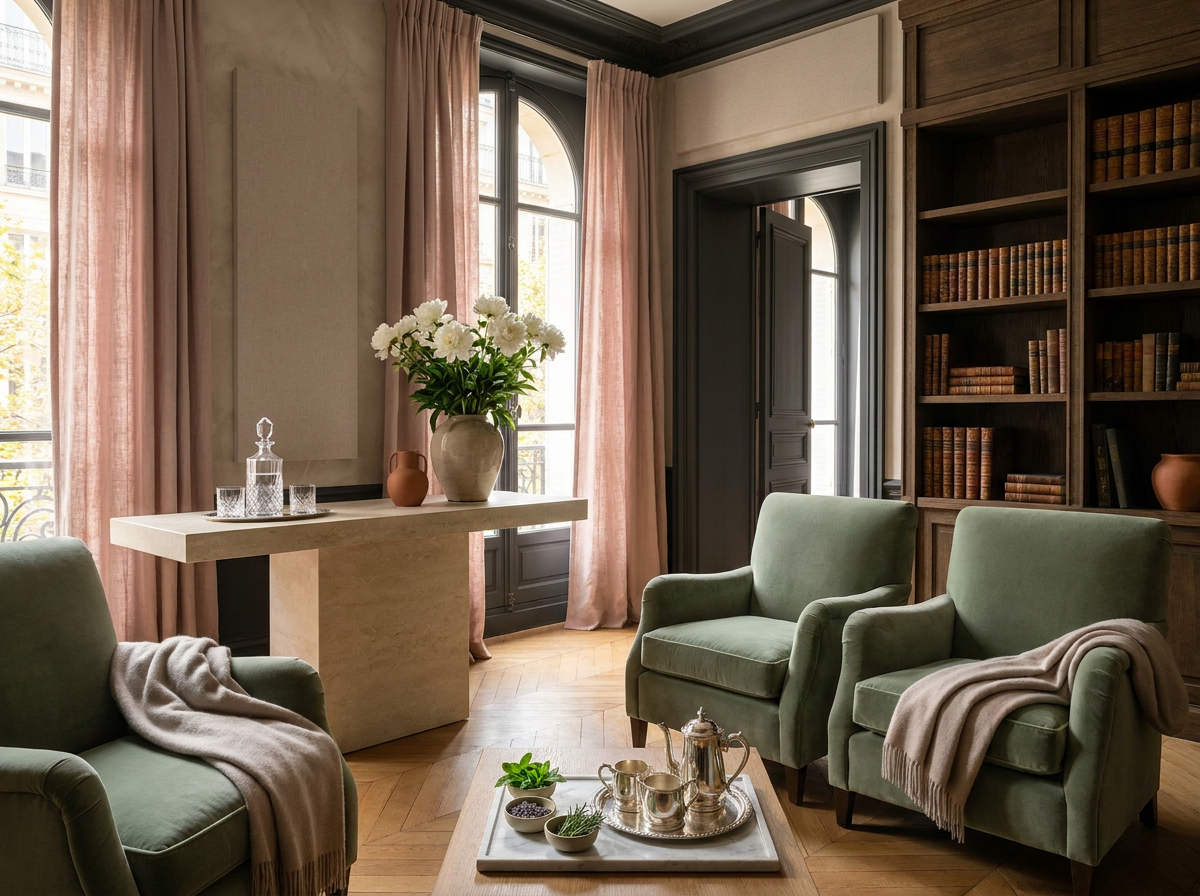
The average human being receives more sensory input from their home environment than from any other single source — yet the majority of those inputs are actively degrading health, accelerating cellular ageing, and suppressing the immune system.
This is not a metaphor. It is measurable biology. And it is the reason that Kenneth Bordewick and Beverly Hills Luxury Interiors have placed the Five Senses Framework at the heart of every commission — from Beverly Hills estates to palaces across the Persian Gulf and the Far East.
The ancient design traditions of Europe and the East understood something that modern luxury has largely forgotten: a room that serves only the eye fails the human being who inhabits it. Great design does not address sight alone. It addresses the entire sensorium — the full biological register of the person who calls the space home. Explore how these principles integrate with our broader philosophy at Quiet Luxury Wellness Design and Wellness Design Principles.
I. Sight: The Light That Governs Biology
The eye is not simply an aesthetic organ. It is the primary regulator of the body's circadian clock — the master timekeeper that governs hormone secretion, cellular repair, immune response, and the precise orchestration of every biological process.
Rooms flooded with cool-spectrum artificial light after sunset disrupt melatonin production and cortisol regulation. Spaces without access to natural daylight suppress serotonin and impair cognitive function. The colour temperature of a room — measured in Kelvin — directly influences alertness, mood, and sleep architecture.
Every BHLI commission includes a full circadian lighting analysis: tunable systems that shift from energising cool whites in the morning to warming amber tones as the day progresses, aligned with the body's natural rhythms. The result is not merely a beautifully lit room. It is a space that actively supports biological health.
“A room that serves only the eye fails the human being who inhabits it. Great design addresses the entire sensorium — the full biological register of a life.”
— Kenneth Bordewick
II. Sound: The Invisible Architecture of Recovery
Acoustic design is the most neglected dimension of luxury interiors. Unwanted sound — traffic, mechanical systems, reverberant hard surfaces — activates the stress response even during sleep, elevating cortisol and fragmenting the deep recovery phases essential to cellular repair.
Research from the World Health Organisation links traffic noise alone to one million healthy life years lost annually across Western Europe — through cardiovascular disruption, cortisol elevation, and sleep fragmentation.
The Five Senses Framework incorporates acoustic measurement before any design solution is specified. Sound-absorptive materials — hand-laid textiles, natural plaster, bespoke cabinetry with internal dampening — are chosen not merely for aesthetic warmth but for biological necessity. The quieter the space, the deeper the restoration.
III. Scent: The Chemical Environment of the Home
The olfactory system has a direct neural pathway to the limbic system — the brain's emotional and immune-regulatory centre. This means that the chemical compounds present in the air of a home are not merely ambient. They are neurologically active.
Synthetic fragrances in cleaning products, off-gassing from conventional furniture and finishes, and VOC emissions from standard paint are classified by the Environmental Protection Agency as significant indoor air pollutants. For BHLI clients, the scent environment is addressed through three interventions: elimination of synthetic compounds from all surfaces and textiles; introduction of natural aromatics through living plants and botanical accents; and multi-stage air purification systems designed to remove particulate matter, VOCs, and biological contaminants to clinical-grade standards.
The home should smell of clean air and natural materials. Nothing more. Nothing less.
IV. Touch: The Biological Response to Material
Human skin contains mechanoreceptors — nerve endings sensitive not only to pain and temperature but to material texture, weight, and thermal conductance. The materials we inhabit daily communicate continuously with the nervous system.
Synthetic textiles impair skin respiration and contribute to microplastic ingestion — a documented concern increasingly cited by Dr. Thom Lobe MD and Dr. Fouad I. Ghaly MD, physician partners to Beverly Hills Luxury Interiors and ÖND | Life's Breath™. Natural fibres — linen, cashmere, undyed wool, organic cotton — offer not only aesthetic refinement but measurable biological benefit: breathability, temperature regulation, and the absence of microplastic shedding.
Stone, hardwood, and natural plaster respond to touch in ways that synthetic alternatives cannot replicate. They carry a thermal quality — neither too cool nor too warm — that registers as safety at the neurological level.
V. Taste: The Water and Air That Enter the Body
The final sense is the most literal: what enters the body within the home environment. Water quality is an often overlooked dimension of interior design, yet it is among the most consequential.
Municipal water supplies in most cities carry measurable levels of chlorine, fluoride, pharmaceutical residues, and microplastic particles. Whole-home water filtration systems, specified as part of every BHLI commission, ensure that every tap, shower, and surface in contact with the body is treated to the highest standard of purity. The body does not distinguish between drinking and absorbing. The water in a BHLI home is designed for optimal cellular hydration and minimum toxic load.
The Five Senses as a Total Design System
These five dimensions do not operate in isolation. They interact, reinforce, and compound. A room that addresses sight but neglects sound remains physiologically compromised. A home that purifies the air but retains synthetic materials continues to degrade from within.
The Five Senses Framework brings these dimensions into deliberate alignment — creating spaces where every sensory input works in service of the client's health, longevity, and wellbeing. This is what Kenneth Bordewick means when he says that BHLI does not simply design rooms. It designs the biological environment in which a life is lived.
Begin With a Longevity Home Wellness Design Audit
The first step toward a home designed for your five senses is a comprehensive assessment of your current environment. The BHLI Longevity Home Wellness Design Audit — offered in partnership with Dr. Thom Lobe MD and Dr. Fouad I. Ghaly MD — evaluates every sensory dimension of your property: light spectrum, acoustic quality, scent and air purity, material composition, and water quality. The result is a prioritised, physician-informed roadmap for transformation.
Enquire About Your AuditSources: Environmental Protection Agency, Indoor Air Quality Research Programme. | WHO Environmental Noise Guidelines for the European Region, 2018. | Environmental Health Perspectives — Klepeis N.E. et al. “The National Human Activity Pattern Survey (NHAPS).” Journal of Exposure Analysis and Environmental Epidemiology, 2001. | Arendt J., Skene D.J., “Melatonin as a chronobiotic.” Sleep Medicine Reviews, 2005 — pineal gland and circadian light regulation. | Leslie H.A. et al. “Discovery and quantification of plastic particle pollution in human blood.” Environment International, 2022. | Reference: Dr. Thom Lobe MD, Beneveda Medical Group, Beverly Hills — regenerative and longevity medicine. | Reference: Dr. Fouad I. Ghaly MD — integrative longevity and environmental medicine.