The Microplastic in Your Mattress Is in Your Heart
By Kenneth Bordewick | Beverly Hills Luxury Interiors | ÖND | Life's Breath™ · In clinical collaboration with Dr. Thom Lobe MD and Dr. Fouad I. Ghaly MD
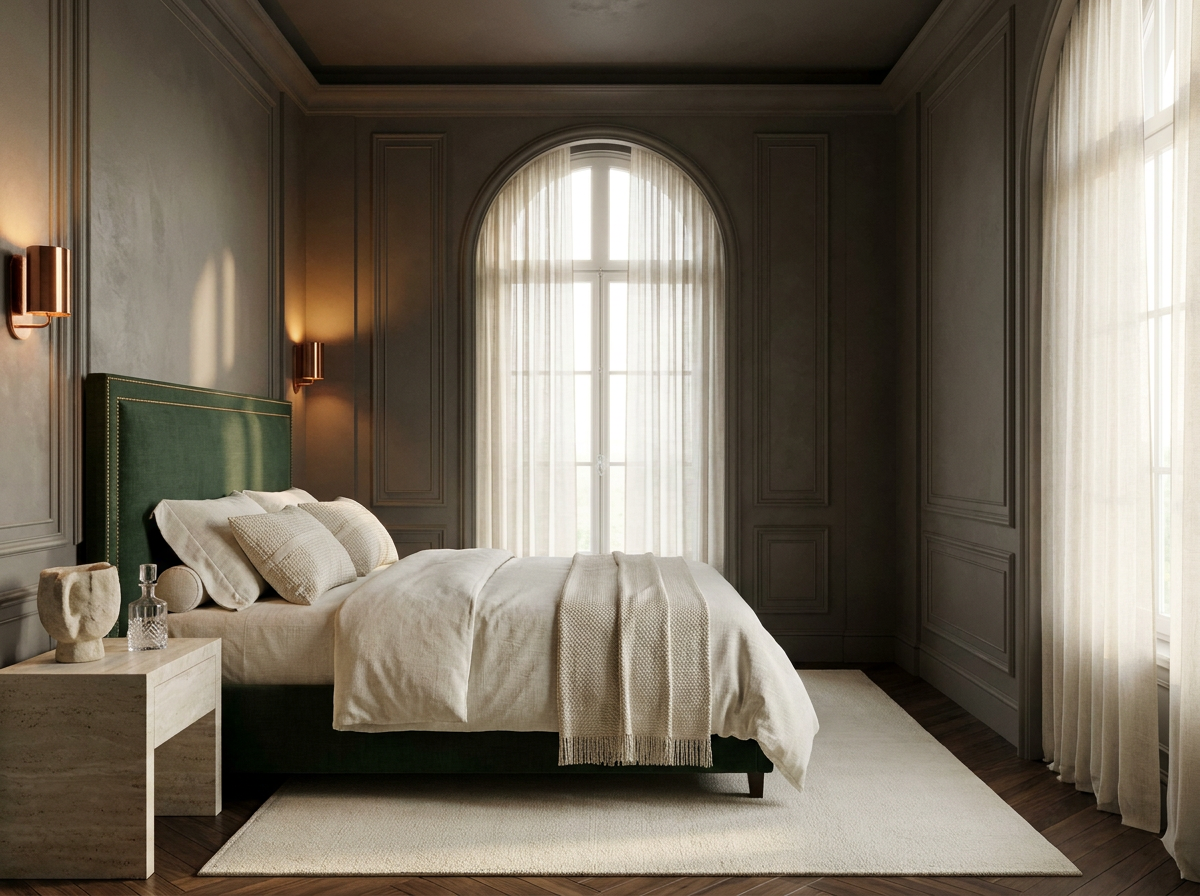
In 2023, researchers at the Medical University of Vienna analysed the cardiac tissue of every patient who underwent surgery at their centre during a controlled observation period. Every single patient — without exception — carried microplastic particles embedded within their heart tissue. The dominant polymer identified was polyethylene terephthalate. The primary source was not a factory, a street, or a river. It was synthetic bedding and mattress cover materials. The room responsible was the bedroom.
This finding is not a statistical anomaly. It is the logical consequence of a design orthodoxy that the ultra-luxury interiors sector has accepted without scrutiny for decades: that premium price guarantees biological safety. It does not.
The Eight-Hour Exposure Event
Sleep is not passive. It is the most intensive biological repair cycle available to the human body — a period during which cellular regeneration accelerates, inflammatory pathways are calmed, and the immune system conducts its most consequential maintenance operations. It is also eight hours of close, still, continuous contact with the mattress, the bedding, the pillowcases, and the air that circulates between them.
A conventional luxury mattress — including many of the most expensive names in sleep technology — contains polyurethane foam, synthetic latex, polymer coatings, and synthetic fabric covers. Each of these materials off-gases and sheds continuously. At body temperature, throughout the night, in an enclosed bedroom with limited air exchange, the microplastic concentration around a sleeping person can reach levels significantly higher than those found in general indoor air.
You are not resting in your bedroom. You are, in many cases, bathing in microplastics.
What the Evidence Establishes
Microplastics in the human body are not inert. A landmark study published in The New England Journal of Medicine in 2024 measured the concentration of microplastic and nanoplastic particles in carotid artery plaque in patients awaiting surgery. Those with detectable particles faced a 4.5 times greater risk of heart attack, stroke, or death within the following thirty-four months compared to those without.
The mechanism is inflammation. Microplastic particles trigger an immune response upon entering tissue. Sustained over months and years — as occurs when a person sleeps nightly on a synthetic mattress in a room lined with synthetic carpet, curtains, and upholstered surfaces — that immune response becomes chronic. Chronic inflammation is the mechanism underlying coronary artery disease, metabolic dysfunction, accelerated cellular ageing, and diminished cognitive performance.
The most expensive mattress on the market may be the most consistent source of microplastic contamination in your life. Price is not a guarantee of biological safety.
The frameworks that govern this approach are outlined in full at Quiet Luxury Wellness Design and Wellness Design Principles.
“The bedroom is the single most consequential room in the longevity home. It is where the body either repairs or is impeded from repairing — and the materials it is surrounded by during that process are the primary determinant of which outcome occurs.”
— Kenneth Bordewick
The Three Rooms That Require Immediate Audit
At Beverly Hills Luxury Interiors, founder Kenneth Bordewick has identified three zones within the ultra-luxury residence that carry the highest microplastic burden — and the highest urgency for redesign.
The Bedroom
Natural alternatives to synthetic sleep materials exist at every price point within the luxury sector: natural latex cores with organic cotton covers certified to GOTS standard; handmade wool mattress toppers; linen and cotton bedding woven without synthetic blends; hardwood bed frames finished without polymer lacquers; natural jute, sisal, or wool floor coverings in place of synthetic carpet. These are not compromises. They are the materials that the world's most refined residences used for centuries — before synthetic polymers replaced them in the mid-twentieth century, with cost efficiency as the primary justification.
The Home Spa and Wellness Suite
The paradox of the unhealthy wellness room is one of the most consistent findings in BHLI's residential audits. Polymer-based grout sealants, synthetic towelling, vinyl-backed bath mats — a space designed for restoration may be delivering sustained microplastic exposure that no amount of therapy can fully counteract. The corrective is total: natural stone grouted with lime, linen and cotton towelling, copper and glass fixtures throughout, and whole-home water filtration at the point of entry.
The Home Office
Synthetic carpet tiles, polymer-coated acoustic panels, and the particulate emissions from certain printing and electronics equipment make the home office one of the highest-concentration microplastic environments in the residence — and the most consistently overlooked, because wellness design has historically focused on the bedroom and spa.
The Physician Partnership
The Microplastic Elimination Protocol at Beverly Hills Luxury Interiors was developed in clinical collaboration with two of the most distinguished longevity physicians in practice today: Dr. Thom E. Lobe MD, a pioneer of integrative and regenerative medicine with four decades of clinical experience, and Dr. Fouad I. Ghaly MD, a specialist in age management and environmental medicine.
Dr. Lobe and Dr. Ghaly contribute clinical oversight to the material specification process — evaluating proposed finishes, textiles, and systems against the biological standards of the longevity-forward home. Their partnership with BHLI and ÖND | Life's Breath™ ensures that every design decision is answerable not merely to aesthetic standards, but to medical ones. The most sophisticated investment a person of means can make is not in the therapy alone. It is in the environment that allows the therapy to hold.
The heart tissue findings of 2023 are not a distant clinical concern. They are the consequence of eight hours of nightly exposure to the materials most luxury homes contain without question. The most important design decision of your life is the one you make before you sleep.
Commission Your Longevity Home Wellness Design Audit
The Longevity Home Wellness Design Audit begins with the bedroom. Every textile, surface finish, and air system is assessed against a microplastic emission matrix; every material evaluated for its biological impact over sustained exposure. The audit delivers a prioritised, physician-informed report and a phased design roadmap. Where appropriate, Dr. Thom Lobe MD or Dr. Fouad I. Ghaly MD may provide direct clinical consultation as part of the process. To commission your Audit, contact the atelier at Beverly Hills Luxury Interiors or enquire through ÖND | Life's Breath™.
Enquire About Your AuditSources: Marfella, R. et al. “Microplastics and Nanoplastics in Atheromas and Cardiovascular Events.” The New England Journal of Medicine, 2024. | Medical University of Vienna (2023), cardiac tissue microplastic study — polyethylene terephthalate found in 100% of cardiac surgery patients. | Campanale, C. et al. “A Detailed Review Study on Potential Effects of Microplastics in Humans.” International Journal of Environmental Research and Public Health, 2020. | Reference: Dr. Thom E. Lobe MD, Regenevéda, Beverly Hills — regenerative and longevity medicine. | Reference: Dr. Fouad I. Ghaly MD — age management and environmental medicine. | Beverly Hills Luxury Interiors | ÖND | Life's Breath™